
As a Senior Moving Operations Specialist with over a decade of experience in Detroit, I know that one of the most common questions we hear is about cost. When it comes to moving a cherished, and often priceless, piano, understanding the potential expense is the first step in planning. Pianos aren't just furniture; they are complex instruments that are both heavy and delicate. Moving one requires specialized skills, equipment, and a deep understanding of logistics. This guide is designed to give you a transparent look at what goes into a professional piano move and help you budget effectively.
Average Costs in Detroit
Let's start with the numbers. While every move is unique, we can provide some realistic price ranges to help you set expectations. In the Detroit metro area, the piano moving cost Detroit typically falls into these brackets for a standard local move (under 25 miles) without significant complications.
- Upright, Spinet, or Console Pianos: You can generally expect the upright piano movers Detroit price to be between $250 and $600. These are the most common types of pianos and, while heavy, are usually the most straightforward to move.
- Baby Grand Pianos: Moving a baby grand is more complex. It requires partial disassembly (removing the legs and pedal lyre) and specialized handling. A baby grand piano moving quote Detroit will likely range from $400 to $850.
- Grand or Concert Grand Pianos: For larger, heavier instruments, costs can start at $500 and go up to $1,200 or more, depending on the exact size, weight, and logistical challenges.
These are baseline figures. The final price on your estimate will be determined by several key factors specific to your move.
Factors That Affect Price
The difference between a $300 move and an $800 move comes down to the details. Our trained crews follow standardized processes to assess each situation, ensuring the safety of both your instrument and your home. Here’s what we look at when preparing a quote.
1. Piano Type, Size, and Weight This is the most significant factor. A 300-pound spinet requires a different approach and less manpower than a 1,000-pound concert grand. Larger pianos necessitate more crew members, heavier-duty equipment like piano boards and dollies, and more time to secure and transport safely.
2. Stairs and Access This is where many homeowners see costs change. The piano moving cost with stairs is a critical variable. Each flight of stairs, whether indoor or outdoor, adds complexity and risk. Our technicians need to use specific techniques and equipment to navigate staircases safely. A standard fee per flight of stairs is common in the industry.
In Detroit, we frequently work in homes with unique architectural challenges. Older homes in neighborhoods like Boston-Edison or the University District often have narrow staircases, tight turns, and steep porch steps. Even in more modern suburbs like Sterling Heights, with its prevalence of 1960s-era Ranch and Split-level homes, we encounter tricky layouts. A split-level entry or moving a piano to or from a finished basement requires careful planning and adds to the labor involved.
3. Distance of the Move The distance between the pickup and drop-off locations directly impacts the cost. A move across town is priced differently than a move to a neighboring county. The quote will account for the travel time for our crew and vehicle, as well as fuel costs.
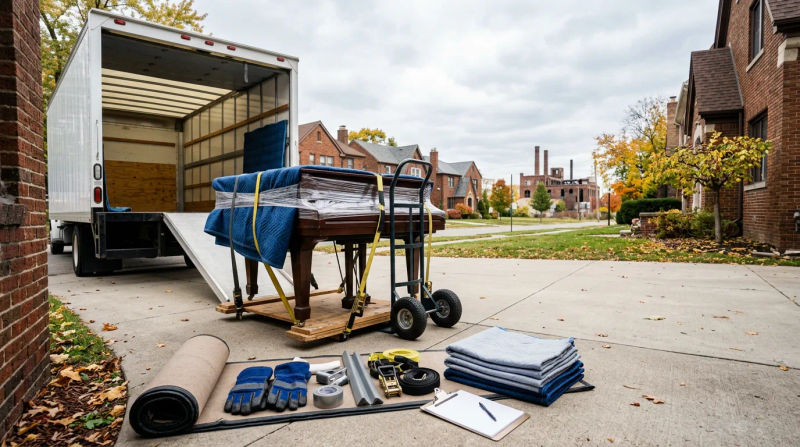
4. Required Equipment Every piano move requires professional-grade equipment, including padded blankets, shrink wrap, heavy-duty dollies, and a piano board (or skid). For complex moves involving multiple levels or obstacles, we may need to use ramps, hoists, or a crane. The need for such specialized equipment will be reflected in the final price.
5. Time of Year Moving demand fluctuates seasonally. The period from late spring through early fall is typically the busiest. In particular, we see a surge in bookings around September as families try to settle in before the school year starts and take advantage of the cooling temperatures. Booking your piano move well in advance can help you secure your preferred date and avoid potential last-minute premiums during these peak times.
How to Get the Best Value
Getting the best value doesn't mean finding the cheapest option - it means getting a safe, professional, and damage-free move at a fair price. As someone who has overseen thousands of moves, I can tell you that cutting corners on a piano move often leads to costly repairs for the instrument or the home.
- Provide Accurate Details: When requesting a quote, be as detailed as possible. Know your piano's type (upright or grand) and height (for uprights) or length (for grands). Count the exact number of stairs at both locations, and note any tight corners, narrow hallways, or unpaved paths. The more information our team has, the more accurate your initial quote will be.
- Book in Advance: Especially if you plan to move during the busy season (May-September), book your movers at least 4-6 weeks ahead of time. This gives you better date availability and helps you lock in a rate.
- Be Flexible: If your moving date is flexible, ask if there are any days of the week or month that are less busy and might offer a better rate. Mid-week and mid-month moves are often more cost-effective than weekends or end-of-month dates.
- Understand the Insurance: Professional movers are required to offer basic liability coverage. However, this is often minimal (e.g., 60 cents per pound). For a valuable instrument, you should inquire about purchasing full-value protection, which covers the actual replacement value of your piano. Make sure you understand the coverage options before moving day.
Questions to Ask Your Contractor
To ensure you're hiring a qualified professional, don't hesitate to ask questions. A reputable mover will be happy to provide clear answers.
- Are you fully licensed and insured specifically for moving pianos?
- Can you describe the equipment you'll use to protect my piano and my floors/walls?
- Is your quote all-inclusive? What are the specific charges for stairs, long carries, or other potential obstacles?
- What is the experience level of the crew who will be on-site?
- Will I receive a written contract or bill of lading that details all the services and costs?
- Do you have experience moving pianos in older Detroit homes or buildings with similar layouts to mine?
Moving a piano is a job for specialists. The risks associated with an improper move - from damaging the piano's internal mechanics to causing serious injury - are simply too high. By understanding the costs and vetting your movers, you can ensure your beautiful instrument arrives at its new home in perfect condition.
For a detailed and personalized estimate for your piano move in the Detroit area, our team at A.W. Family Movers is here to help. Contact us for a free consultation where we can assess your specific needs and provide an accurate quote.